One of the most exciting stages of the design process for me is the hunt and acquisition of fine art. I'll let you in on a secret: I often design a whole room backwards from a single painting. A great canvas or sculpture can be the muse — the thing that sets everything else in motion, dictating the palette, the mood, sometimes even the architecture around it. So while a lot of people think of art as the last thing you hang once the room is "done," I tend to think of it as the first thing I go looking for.
I comb the inventories of our favorite auction houses constantly, hunting for pieces that spark my creative juices and are also, in their own right, worthy finds — often at prices that are not only attainable but genuinely smart investments. This past season we hit the jackpot. I'm still pinching myself, because we managed to obtain six pieces by the late Bernard Chaet (1924–2012). The long-time Yale faculty member was a noted painter and draftsman who helped transform Yale's traditional art program into a more modernist one, and in his own work he melded landscape and abstraction in the tradition of van Gogh, Seurat, Munch, Mondrian, and Hodler. His work is gorgeous, and it pushes the past into the present in the most spectacular way. Finds like that don't come along every day, and they remind me why I love the chase.
People ask me all the time how to start collecting, and how to know if a piece is "right." Here's what I tell them.
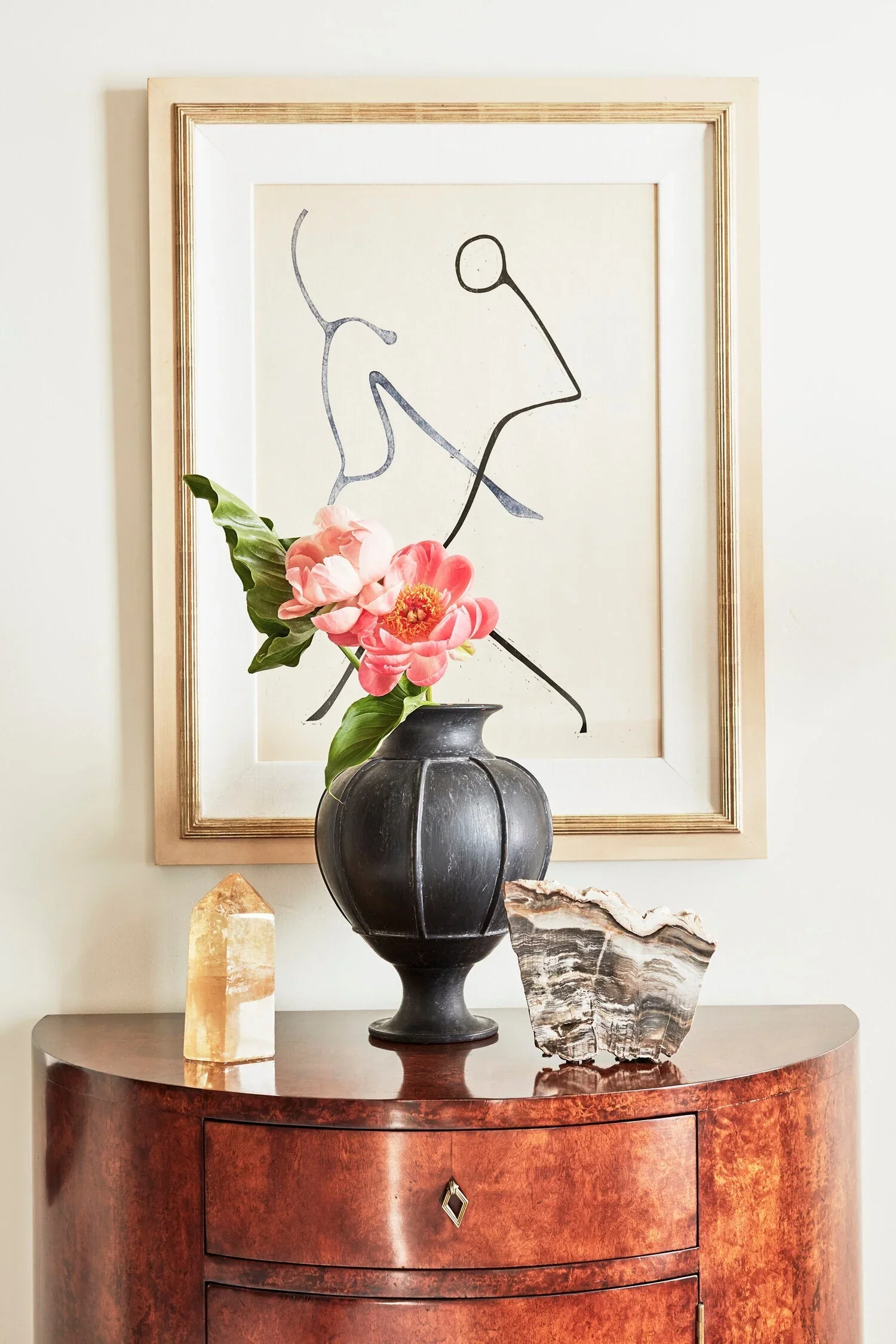
Buy what stops you in your tracks. Not what matches the sofa. I can't stress this enough. A piece of art should give you a little jolt — that involuntary pause when you walk past it. If you're standing in front of something trying to talk yourself into loving it, keep walking. The pieces worth living with are the ones you can't stop thinking about on the drive home.
Let scale do the heavy lifting. One of the most common mistakes I see is art that's too small for its wall, hung too high, floating like a postage stamp in a sea of paint. As a rule, art lives happiest at eye level, and a single large piece almost always reads as more confident and more expensive than a scatter of little ones. If you do group smaller works, hang them like one composition rather than a handful of strangers.
Mix the serious with the soulful. A collection doesn't have to mean a wall of museum pieces. Some of my favorite rooms pair a real investment work with a flea-market sketch, a child's painting, or something a client picked up traveling. The mix is what makes it feel like a life, not a showroom. Hunt everywhere — auction houses and galleries, yes, but also estate sales, student exhibitions, and the studios of emerging artists whose work you'll be proud to say you bought early.
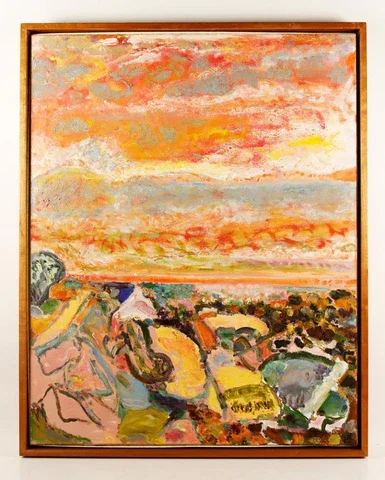
Frame it like it matters, because it does. Framing is design, full stop. The right frame can make a modest piece sing and the wrong one can flatten a great one. I design custom framing for nearly every piece we place, treating the frame as part of the artwork rather than an afterthought from a shop wall. And once it's up, light it — a picture light or a well-aimed fixture turns a painting from wallpaper into the heartbeat of a room.
The next step with our Chaet pieces will be designing their framing and then imagining the spaces they'll be composed within. That part — placing a beautiful thing into a room and watching the whole design click into focus around it — is, honestly, my favorite part of this entire job.
Until next time, here's to creating your own Noble Spaces!